
If you’ve bought or sold a home, chances are you’ve heard the word radon tossed around like it’s either no big deal… or the end of the world.
Spoiler alert: it’s neither.
One of the biggest misconceptions I hear from clients is this idea that there’s a “safe” level of radon. Like there’s some magic number where you can relax and say, “Great, we’re all good here.”
Not exactly.
According to the U.S. Environmental Protection Agency, there is no completely safe level of radon exposure. It’s a naturally occurring radioactive gas that is colorless and odorless – and a known cause of lung cancer. The risk doesn’t suddenly appear at a certain number, it increases over time with higher exposure.
So why do we keep hearing about “acceptable” levels?
Well, this is where a lot of the confusion lies: the EPA actually uses something called an action level, not a safety line in the sand.
That action level is 4.0 pCi/L (picocuries per liter). If a home tests at or above that number, the EPA recommends taking steps (“action”) to reduce the radon level.
For some context, in the United States:
- The average outdoor radon level is about 0.4 pCi/L
- The average indoor level is about 1.3 pCi/L
So yes, radon is everywhere. The question isn’t if it exists, it’s how much is present and what level of risk you’re comfortable with.
Think of it less like a pass/fail test and more like a spectrum.
Why This Matters More for Pennsylvanians
Here’s where things get a little more local.
According to the Pennsylvania Department of Environmental Protection, “Pennsylvania has one of the most serious radon problems in the United States. Approximately 40% of homes tested in Pennsylvania have radon levels above the EPA’s action guideline of 4.0 pCi/L.” This is largely due to the geology here (lots of rock and soil that naturally produce radon gas).
Translation: radon isn’t rare in Central PA. It’s common.
And before anyone panics, this does not mean there’s something “wrong” with a house that tests above the action level. It means the house is… in Pennsylvania.
What This Means in a Real Estate Transaction
A radon test isn’t about labeling a home as “good” or “bad.” It’s about understanding what you’re working with.
Here’s what I see all the time:
- A home can be beautifully maintained, structurally sound, and still have elevated radon
- Two houses on the same street can test completely differently
- When levels are at or above 4.0 pCi/L, mitigation is a common and effective solution, not a dealbreaker
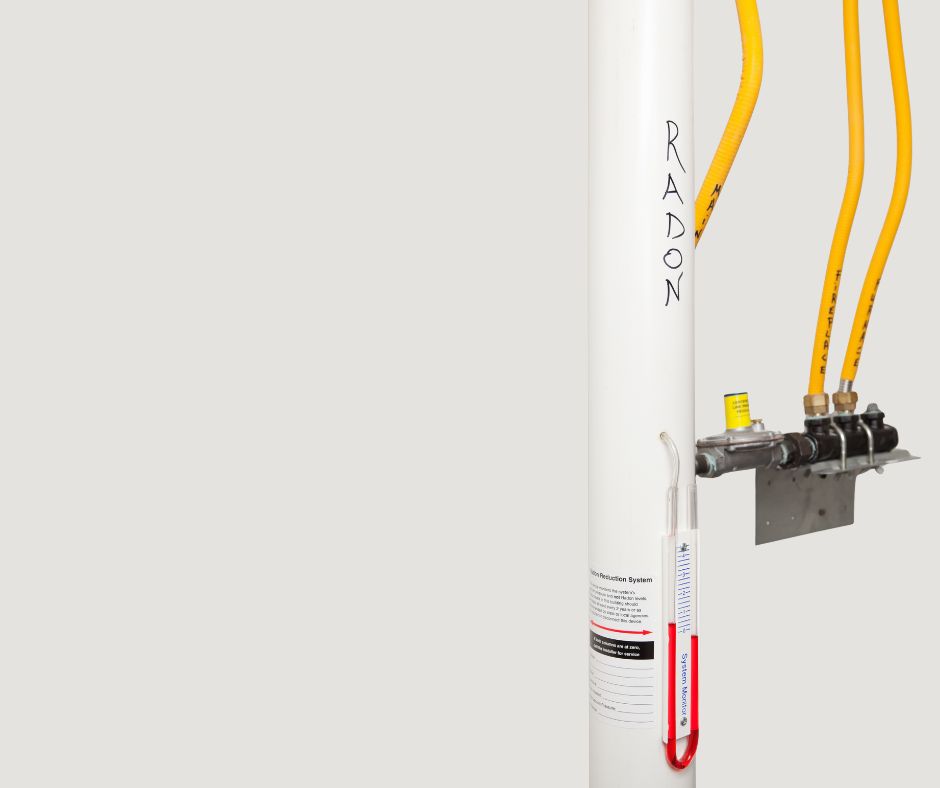
And now, the important part that I hope will clear up some of the aforementioned confusion: a properly installed mitigation system is designed to bring radon levels below the EPA’s action threshold, NOT to bring radon down to a “safe” level.
The Bottom Line
Radon isn’t something to ignore… but it’s also not something that should cause you to walk away from your dream home.
It’s not about chasing a mythical “safe” number. It’s about understanding the threshold for action, putting it in context, and knowing your options.
And around here, it’s just one of those things that comes with the territory… like unpredictable weather and people having very strong opinions about Wawa vs. Sheetz (btw the only correct opinion is Wawa – but that’s a topic for a different blog).
If you have questions about radon, or anything about the home buying process, I’m always happy to walk you through it.
0 Comments